Tech and Tourism Conference Digital System
Category: Platform Design & Marketing Automation System
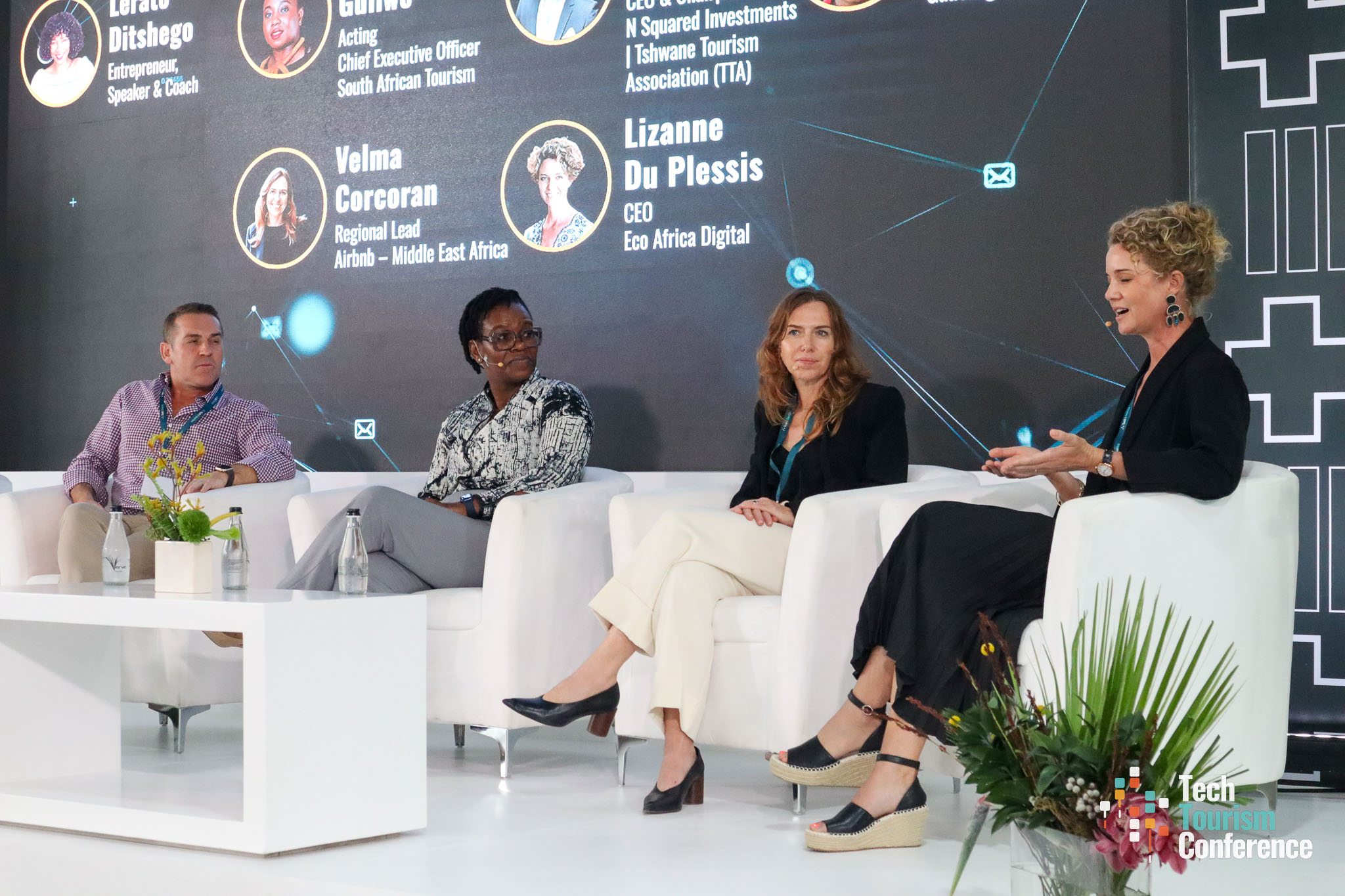
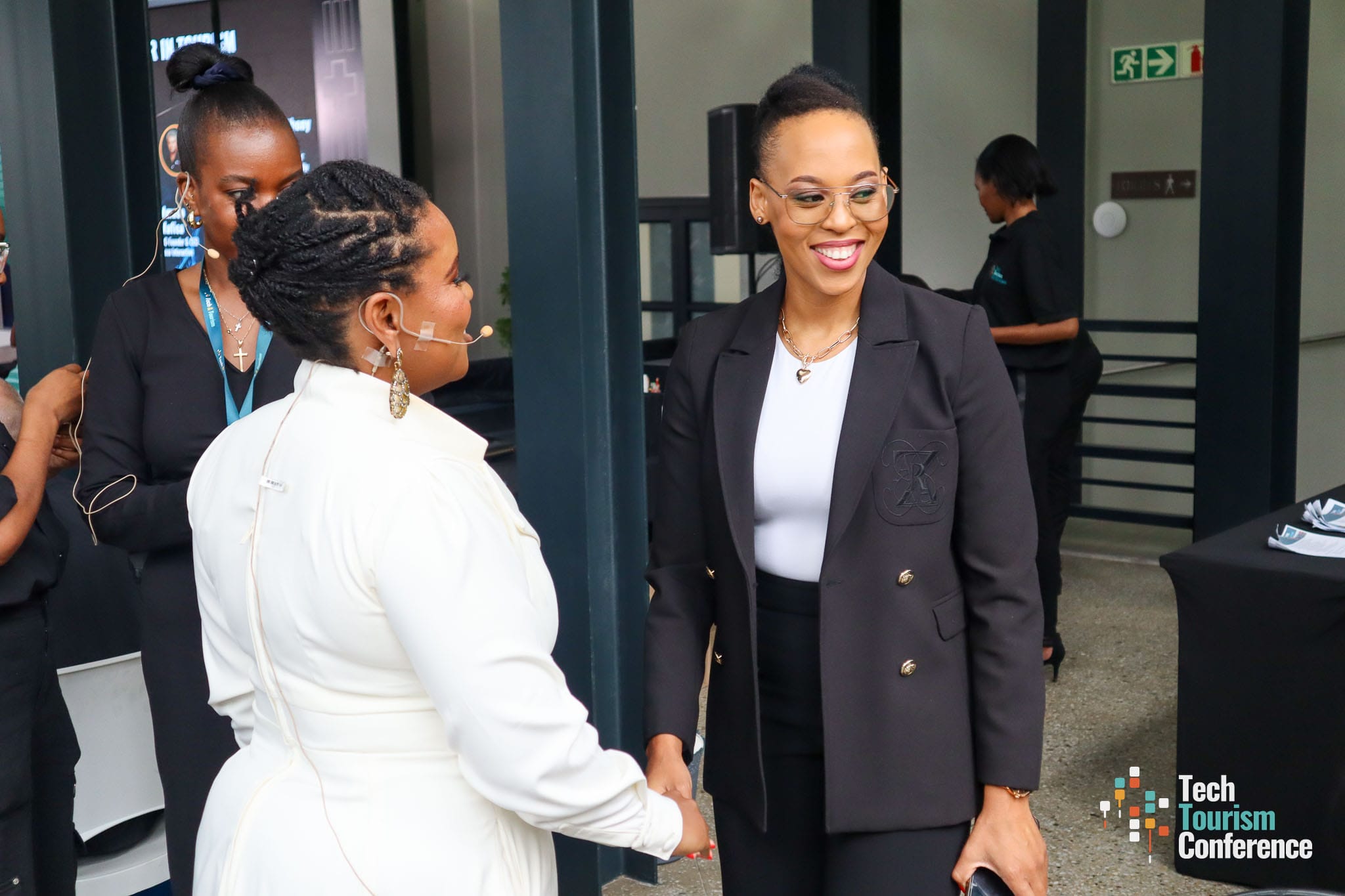
Client/Context: Tech and Tourism Conference – Annual industry event exploring the intersection of technology and tourism sector (25+ speakers, 8-person organizing team with external teams)
Timeline: August 2023 – February 2024
Role: Lead Designer & Digital Systems Architect – End-to-end ownership of web platform, automation workflows, and marketing creative
Disciplines: Web Design & Development, SEO Strategy, Marketing Automation, Email Marketing, Graphic Design, Motion Graphics, UX Optimization
1. CONTEXT AND PROBLEM
The Tech and Tourism Conference needed a digital presence that would outperform competing conferences in the same space. The challenge was multi-layered: not only did the website need to rank organically above established competitors, but the entire registration and communication system needed to operate efficiently without overwhelming a small team with manual administrative work.
Existing conference sites in the tech and tourism space had established SEO authority. The team faced the prospect of manually managing delegate information, sending individual emails, coordinating speaker details, and maintaining consistent communication across multiple touchpoints—all while promoting the event through various marketing channels.
The stakes were high: poor discoverability meant fewer attendees. Friction in the booking process meant lost registrations. Manual workflows meant team burnout and inevitable errors in delegate communication.
2. CONSTRAINTS AND REALITY
Timeline Pressure
- Systems thinking & architectural design
- Business requirements translation
- Stakeholder alignment & communication
- Digital transformation roadmapping
Small Team, High Workload
8-person internal organizing team (plus external partners) managing an annual conference with 25+ speakers. Limited internal resources to manually manage delegate communications, speaker coordination, and ongoing marketing production.
Competitive SEO Landscape
Competing against established conference websites with existing domain authority and backlink profiles. Had to achieve organic ranking without paid advertising budget.
Multi-Channel Coordination
Website, email marketing, social media, print materials, and motion graphics all needed to maintain brand consistency while being produced simultaneously.
Technical Integration
Needed seamless payment processing, ticket generation, and automated communication systems that worked reliably without technical expertise from the team.
No Room for Error
Registration and payment flows had to be flawless—any friction would result in lost attendees and revenue.
3. ROLE AND SCOPE
Led end-to-end digital transformation for the conference—from strategic planning through execution across web, automation, and marketing creative.
Direct Ownership
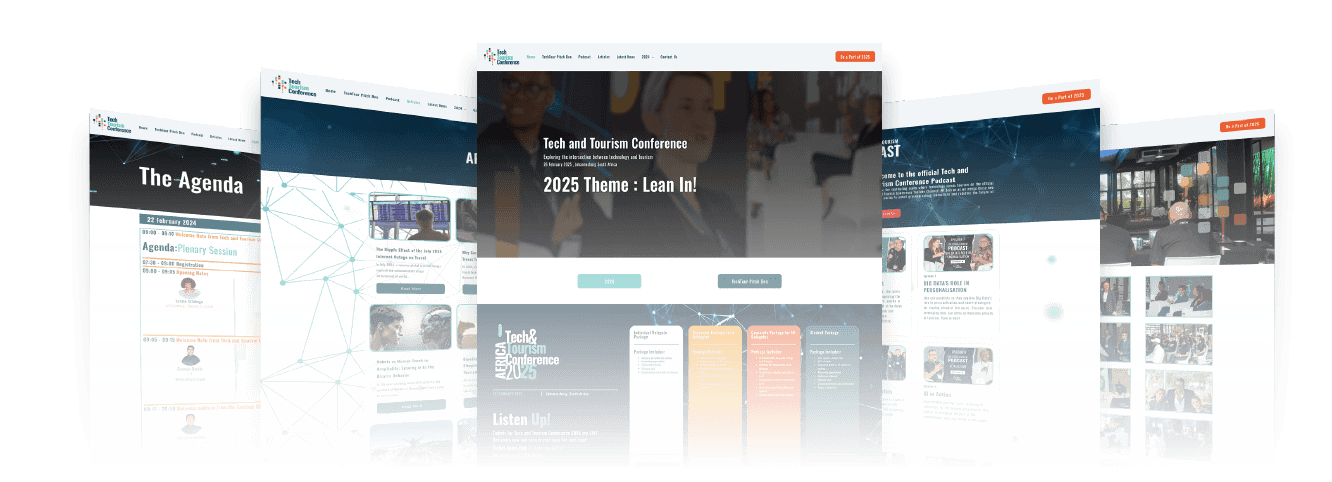
- Complete website design, development, and SEO strategy
- All automation workflows (registration, email sequences, speaker coordination)
- User experience optimization based on analytics and behavior data
- All marketing creative production (social media, email newsletters, print materials, motion graphics)
Strategic Decisions
- SEO approach and content strategy to outrank competitors organically
- Automation architecture to eliminate manual work
- User flow optimization for seamless booking experience
- Multi-channel brand consistency across all touchpoints
Collaboration
- Worked with conference team to define communication sequences and delegate journey
- Coordinated with speakers for content collection
- Aligned marketing creative with event messaging and positioning
4. SYSTEM-LEVEL SOLUTION
EXPERIENCE LAYER (What users saw and interacted with)
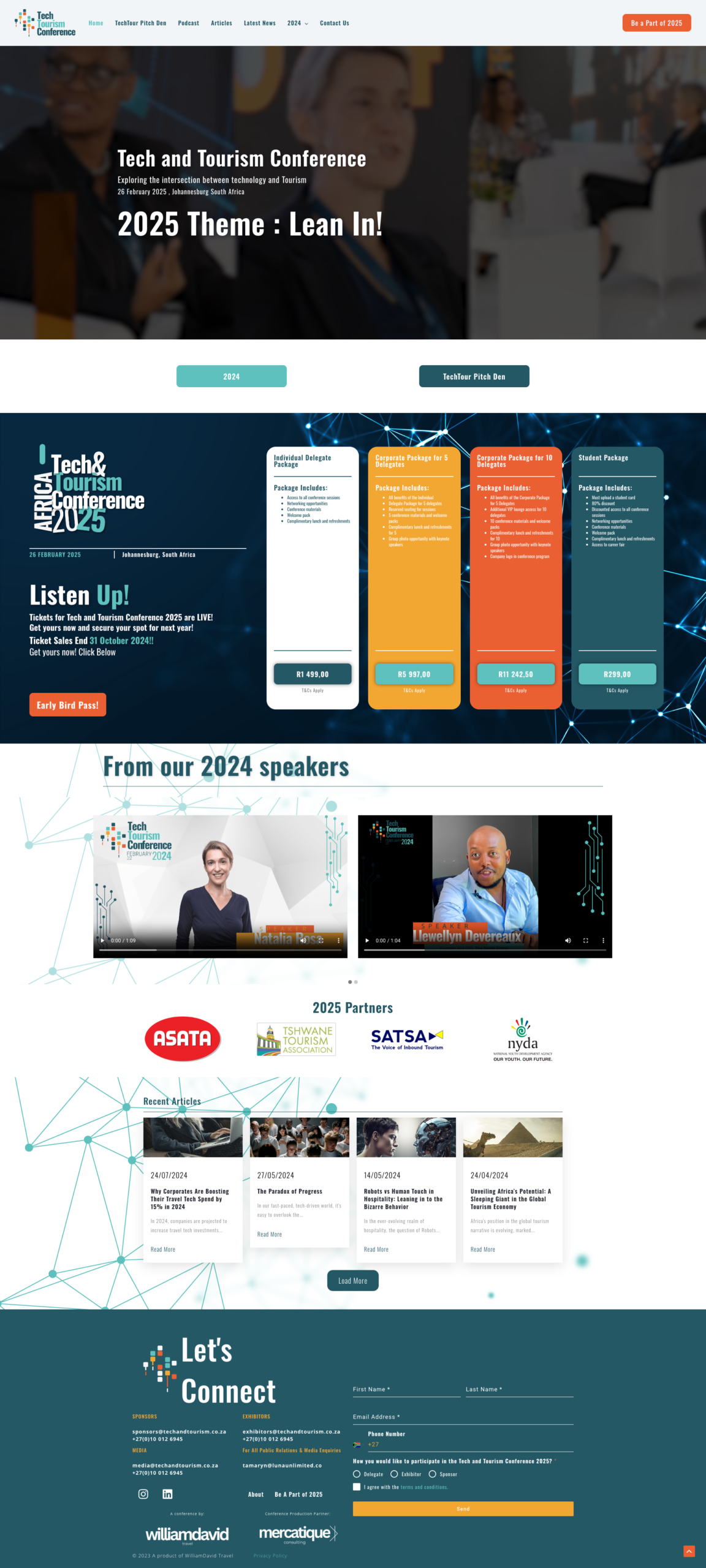
Website Design & User Experience
- SEO approach and content strategy to outrank competitors organically
- Automation architecture to eliminate manual work
- User flow optimization for seamless booking experience
- Multi-channel brand consistency across all touchpoints
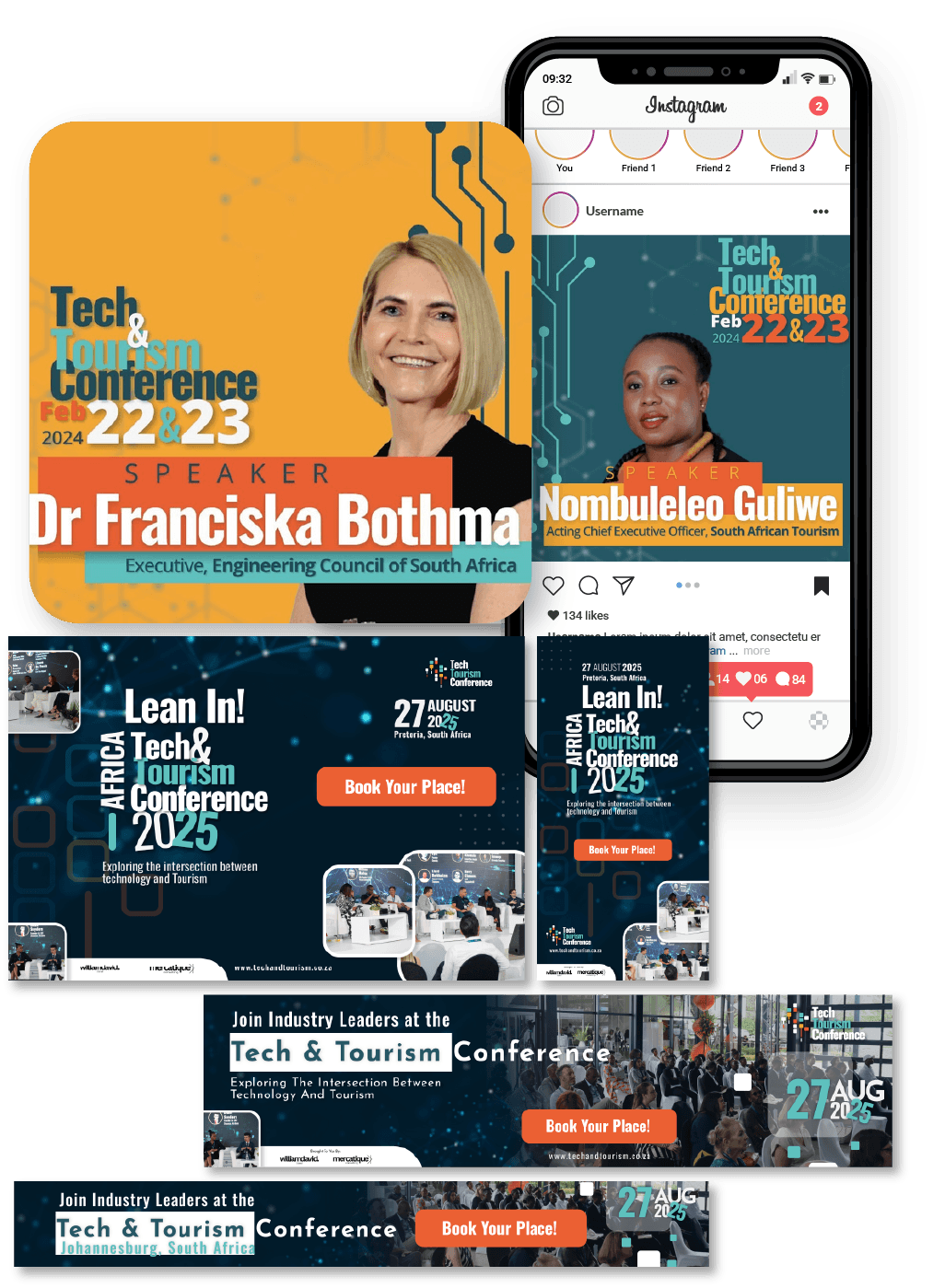
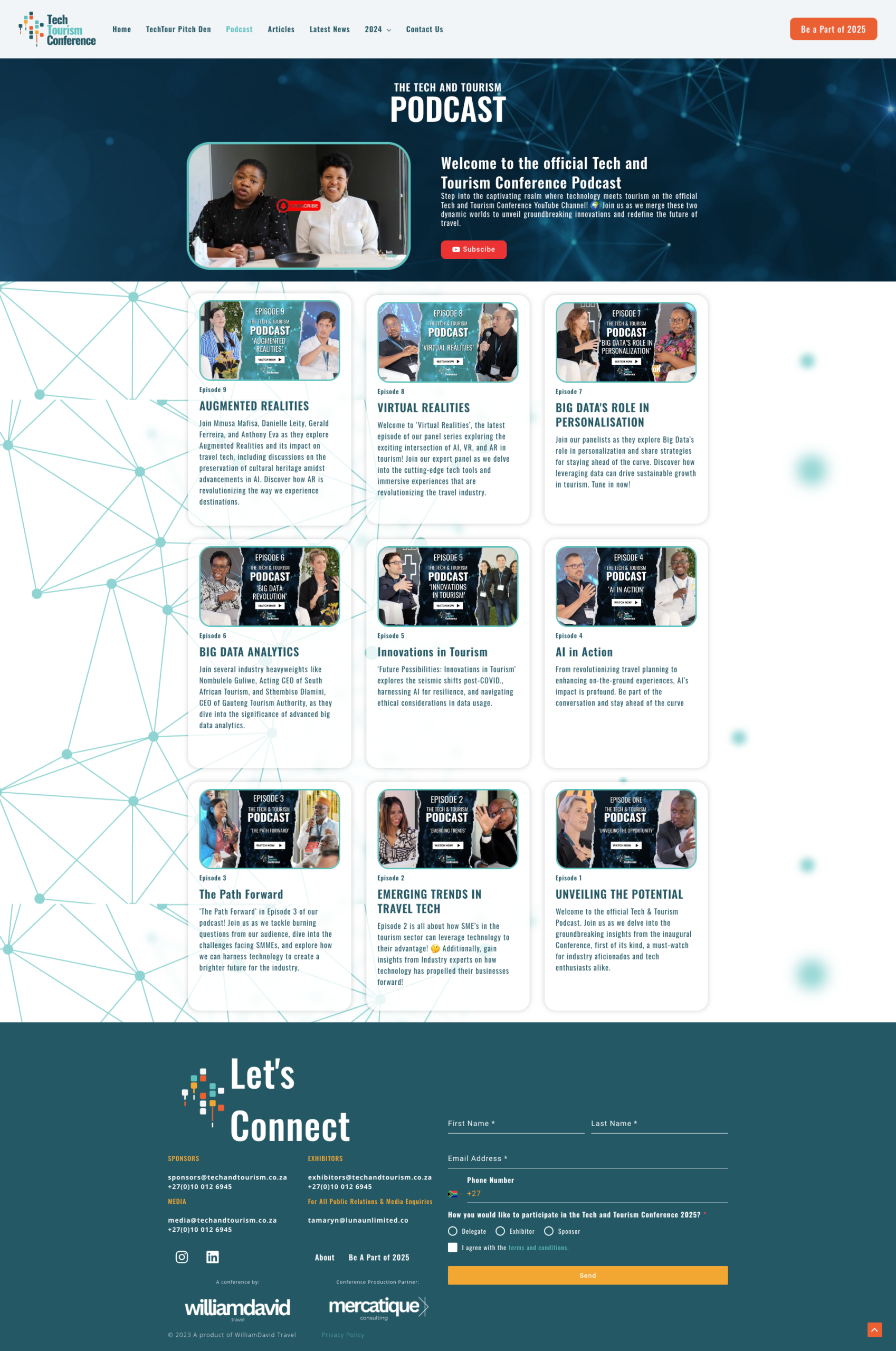
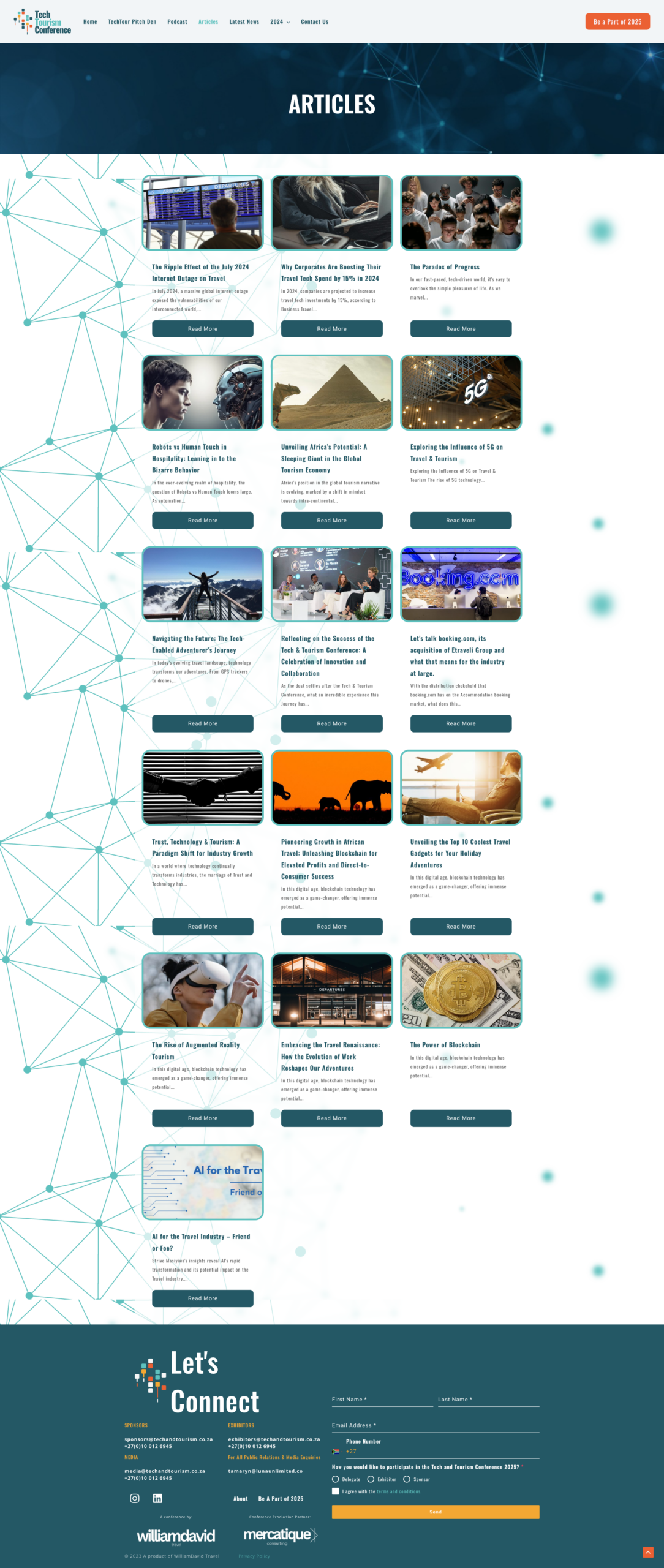
Multi-Channel Marketing Creative
- Designed social media content suite for speaker announcements and conference updates
- Created email newsletter templates for consistent delegate communication
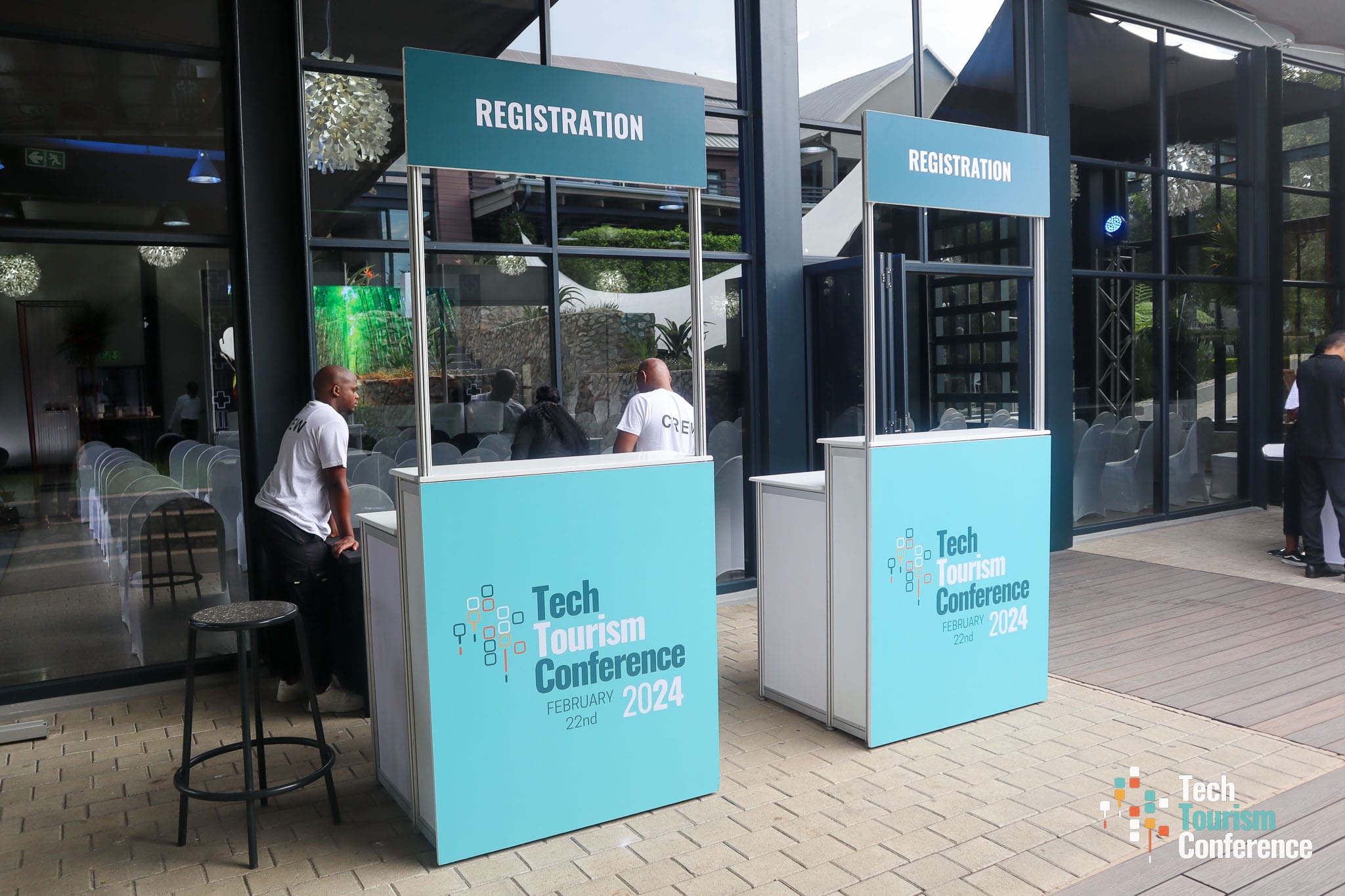
- Produced print advertising materials (flyers, banners, prospectus, agenda)
- Developed motion graphics for conference (intros, speaker panel graphics, promotional videos)
- Maintained cohesive brand identity across all touchpoints
SYSTEM LAYER (How it was built and maintained)
SEO & Organic Discovery
- Built WordPress platform with SEO-first architecture: semantic HTML, optimized meta tags, structured data
- Developed content strategy targeting tech-tourism conference keywords
- Continuously optimized based on search performance and competitor analysis over 8-month period
- Achieved organic ranking above established competitors through strategic content and technical SEO
Payment & Ticketing Integration
- Integrated WooCommerce with Yoco (local South African payment gateway) for seamless payment processing
- Built WordPress-based e-commerce functionality optimized for conference ticketing
- Automated ticket generation upon successful payment
- Built confirmation and receipt delivery system
Data Management & Tracking
- Worked with conference team to define communication sequences and delegate journey
- Coordinated with speakers for content collection
- Aligned marketing creative with event messaging and positioning

WORKFLOW LAYER (How the team operated)
Automated Delegate Communication System
- Built Zapier-based email automation sequence triggered by booking completion:
- Immediate: Payment confirmation + conference ticket delivery
- Welcome email with conference essentials
- Pre-conference email series with progressive information disclosure
- Strategic timing to maintain engagement without overwhelming
- Connected WordPress/WooCommerce to email delivery and database management
Centralized Database Management
- Created spreadsheet-based delegate management system as automation trigger
- Automated updates to prevent manual data entry errors
- Built transparency system so team could track who received what communication
- Eliminated need for manual email sends and track
Speaker Coordination Automation
- Designed form-based speaker detail collection system
- Automated image upload and data capture
- Set up automatic email notifications to team upon speaker submission
- Stored all speaker data in organized spreadsheet for easy access
- Removed friction from speaker onboarding process
Continuous Optimization Workflow
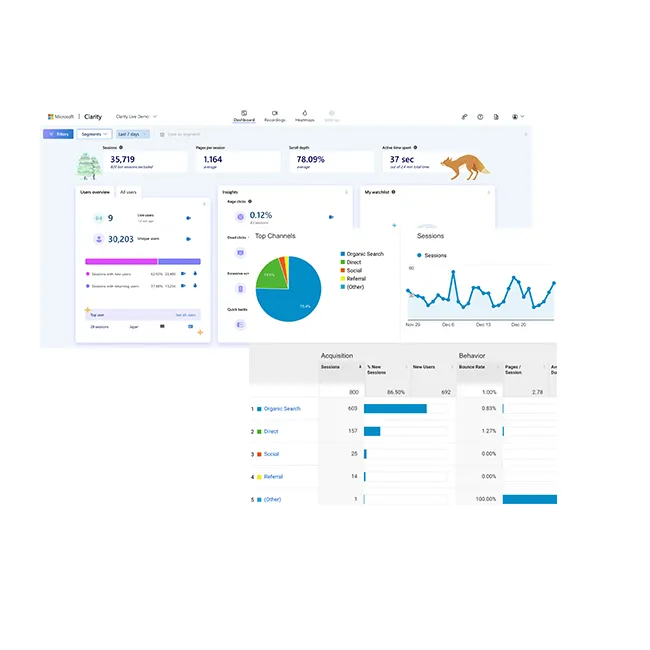
- Established regular analytics review cycle
- Made iterative improvements to user flows based on behavior data
- Optimized conversion points based on drop-off analysis
- Refined content and structure based on SEO performan
5. DECISION LOGIC
Why SEO-first organic strategy over paid advertising?
Long-term value and credibility. Organic ranking builds sustained traffic and positions the conference as an established authority. Paid ads stop Vworking when budget runs out. Given the timeline (months before conference), organic SEO was achievable and more cost-effective. Built on creating genuinely valuable content that served the tech-tourism audience.


Why WordPress + WooCommerce + Yoco?
WordPress provided the right balance of flexibility, SEO capability, and team maintainability. WooCommerce offered robust e-commerce functionality specifically built for ticketing and events. Yoco integration was essential for local South African payment processing—supporting local payment methods delegates were familiar with. Alternative platforms (Webflow, custom build) either lacked native e-commerce or would have exceeded timeline and budget. WordPress’s plugin ecosystem enabled rapid implementation of needed functionality without custom development.
Why Zapier + spreadsheet-based automation instead of complex CRM?
Pragmatic choice based on team capability and timeline. Team was familiar with spreadsheets, setup time was minimal, and integration with automation tools (likely Zapier/Make/N8n) was straightforward. A full CRM would have required training, migration time, and ongoing maintenance the small team couldn’t support. The spreadsheet solution provided transparency—everyone could see the data—and reliability without technical complexity.


Why automated email sequences over manual sends?
Eliminated human error and reduced team workload by 80%+. Ensured every delegate received consistent, timely information regardless of when they registered. Freed the team to focus on strategic conference planning rather than administrative email management. Sequences could be refined once and would work reliably for all delegates.
Why form-based speaker coordination?
Removed the bottleneck of manually collecting speaker details via back-and-forth emails. Standardized information capture—everyone submitted the same required details. Automated storage and team notification meant immediate visibility without manual tracking. Dramatically reduced coordination time and prevented missing information.

Why continuous optimization based on analytics?
Conference registration is too important to “set and forget.” User behavior data revealed friction points we couldn’t have predicted. Iterative optimization improved conversion rates progressively—small improvements compounded over months. Data-driven decisions removed guesswork and personal preferences.
Why unified multi-channel creative production?
Brand consistency builds credibility and recognition. Managing all creative in-house ensured visual alignment between website, social media, email, print, and motion graphics. Attendees experienced a cohesive conference brand regardless of touchpoint. Also provided speed and flexibility—could update messaging quickly without external dependencies.

6. OUTCOMES AND IMPACT
SEO & Discovery
- Achieved organic ranking above competing tech-tourism conference websites
- Built sustained search visibility without paid advertising spend
- Positioned conference as discoverable authority in tech-tourism space
Team Capability & Transparency
- Created system the 8-person team could manage without technical expertise
- Provided full visibility into delegate status and communication history across 100+ registrations
- Reduced speaker coordination time by 3x—managing 25+ speakers efficiently through automated workflows
- Established reliable workflows that didn’t require constant oversight
Conversion & Registration
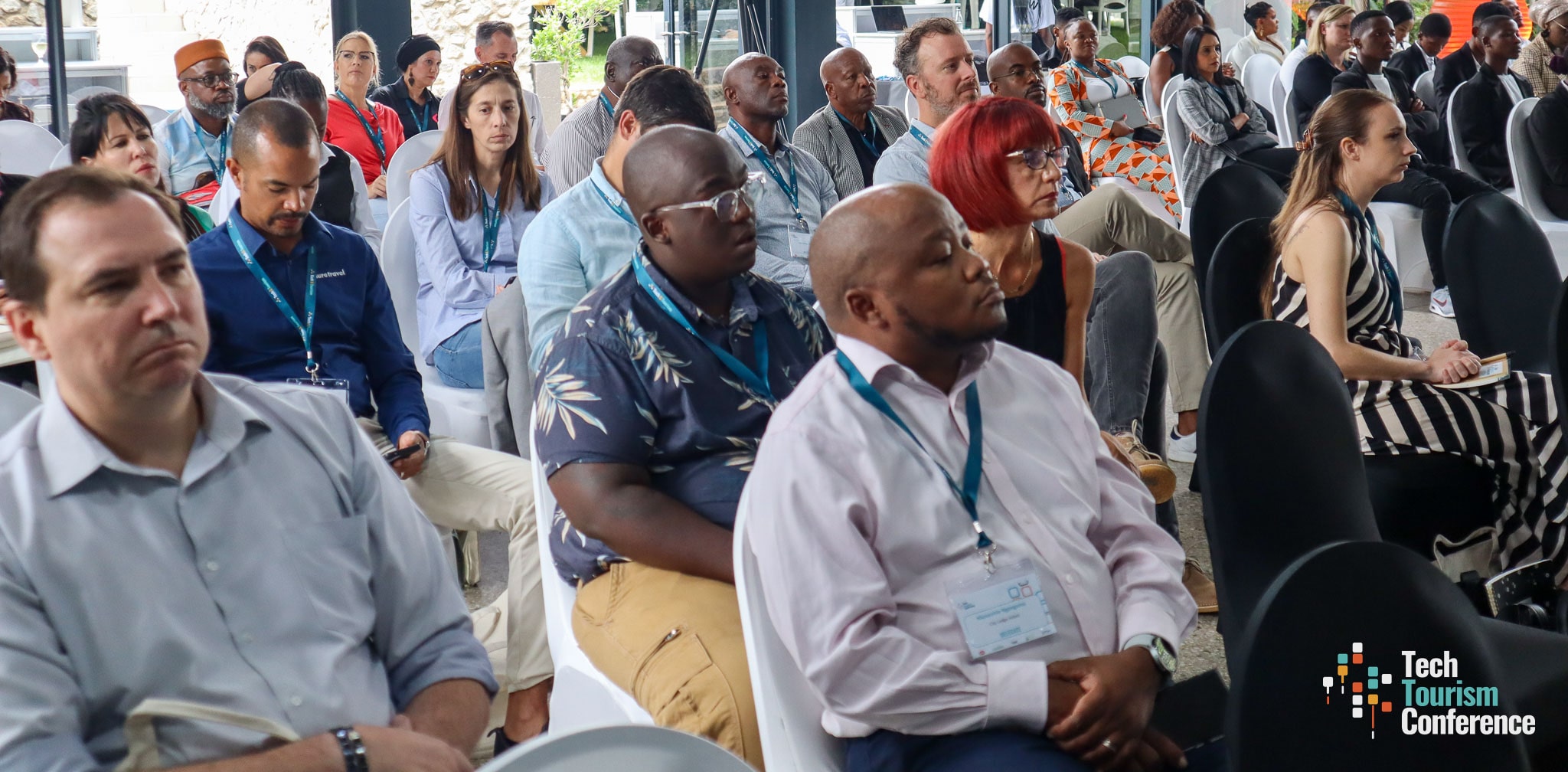
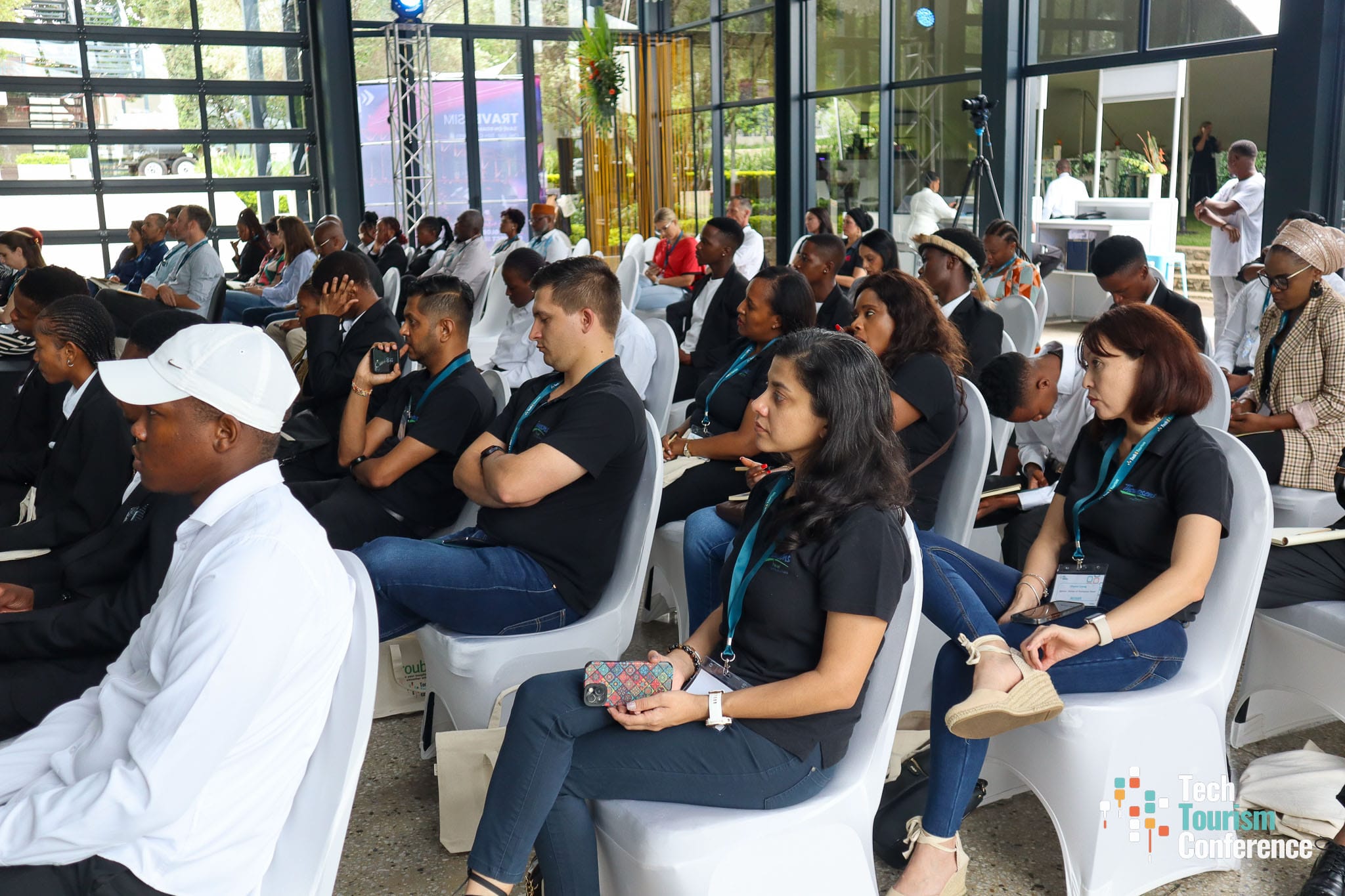
- Successfully registered 100+ delegates through the optimized booking system
- Created seamless booking and payment experience with minimal drop-off
- Reduced registration friction through iterative user flow optimization
Multi-Channel Marketing Success
- Maintained cohesive brand identity across 6+ different channels and formats
- Produced complete marketing suite in-house with speed and flexibility
- Supported conference promotion with consistent, professional creative across all touchpoints
- Successfully promoted annual event with 25+ speakers and 100+ attendees through integrated marketing approach
Operational Efficiency
- Saved hundreds of hours of manual work through automation across 8-month period and conference execution
- Eliminated human error from delegate communication process
- Freed 8-person team to focus on strategic conference planning and partner coordination rather than repetitive tasks
- Ensured 100% of 100+ delegates received consistent, timely communication regardless of registration timing
- Reduced speaker coordination time by 3x through automated form-based collection system (25+ speakers managed efficiently)
System Reusability
- Built automation architecture that could be reused for future annual conference iterations
- Created design templates and workflows that reduced future production time
- Established sustainable operational model for 8-person team managing annual events with 100+ attendees and 25+ speakers
7. TRANSFORMATION TAKEAWAY
This project proved that digital transformation isn’t about complex technology—it’s about identifying repetitive patterns and systematizing them intelligently.
The real value wasn’t in any single element (the website, the emails, the graphics)—it was in designing how all the pieces worked together as a system. By automating delegate communication, speaker coordination, and data management, we transformed a potentially overwhelming operational challenge into a smooth, reliable workflow that freed the team to focus on creating a great conference experience.
Key reusable insight:
When facing multiple manual workflows, the highest-leverage intervention is often creating simple automation that eliminates human touchpoints. Spreadsheets + Zapier automation can deliver 90% of the value of expensive platforms at 10% of the complexity—if designed thoughtfully. The 3x improvement in speaker coordination and hundreds of hours saved proved this approach worked at scale (100+ delegates, 25+ speakers, 8-person team).
The SEO success demonstrated that organic discoverability requires sustained, strategic effort—not magic. Consistent optimization based on data, combined with genuinely useful content, outperformed established competitors without paid advertising.
The framework that made this work:
- Map all manual workflows and identify repetitive patterns
- Design simple automation that eliminates human error
- Create transparency so teams trust the system
- Optimize continuously based on real user behaviour
- Maintain brand consistency across every touchpoint
This approach transformed what could have been a chaotic, manually-intensive event promotion into a systematic, scalable operation—and the structure is reusable for any multi-touchpoint campaign or event.